Early Life
Background and Childhood[2]
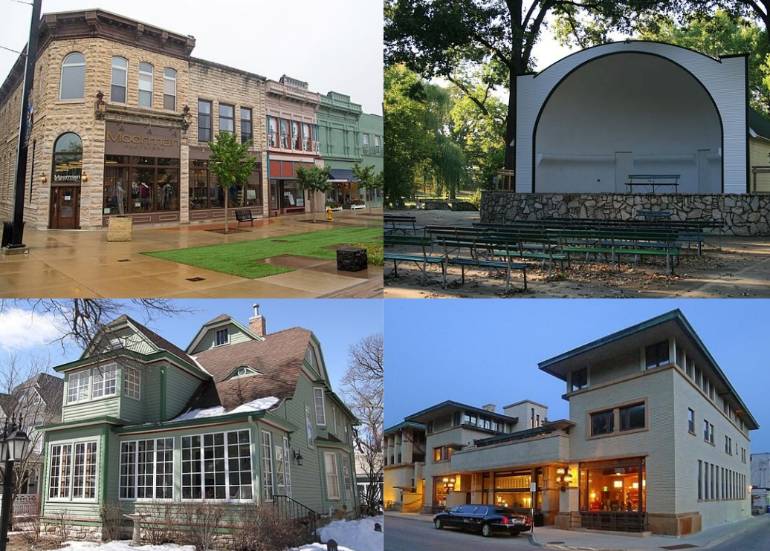
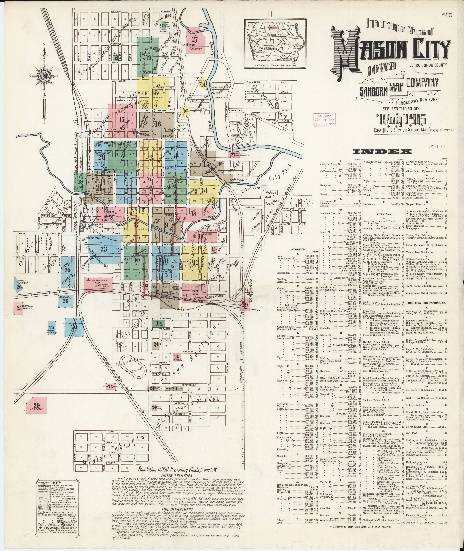
Michael Luick-Thrams was born as “Michael Lee Luick” at 8:06 on 18 December 1962, in Mason City, Iowa. He was named after his great-grandfather George Michael Luick who, Michael later discovered, had been a member of the Ku Klux Klan in 1920s Belmond and even marched in KKK parades in Mason City. In 1989, he legally changed his name to “Aliza Michael Luick-Thrams”. [3]
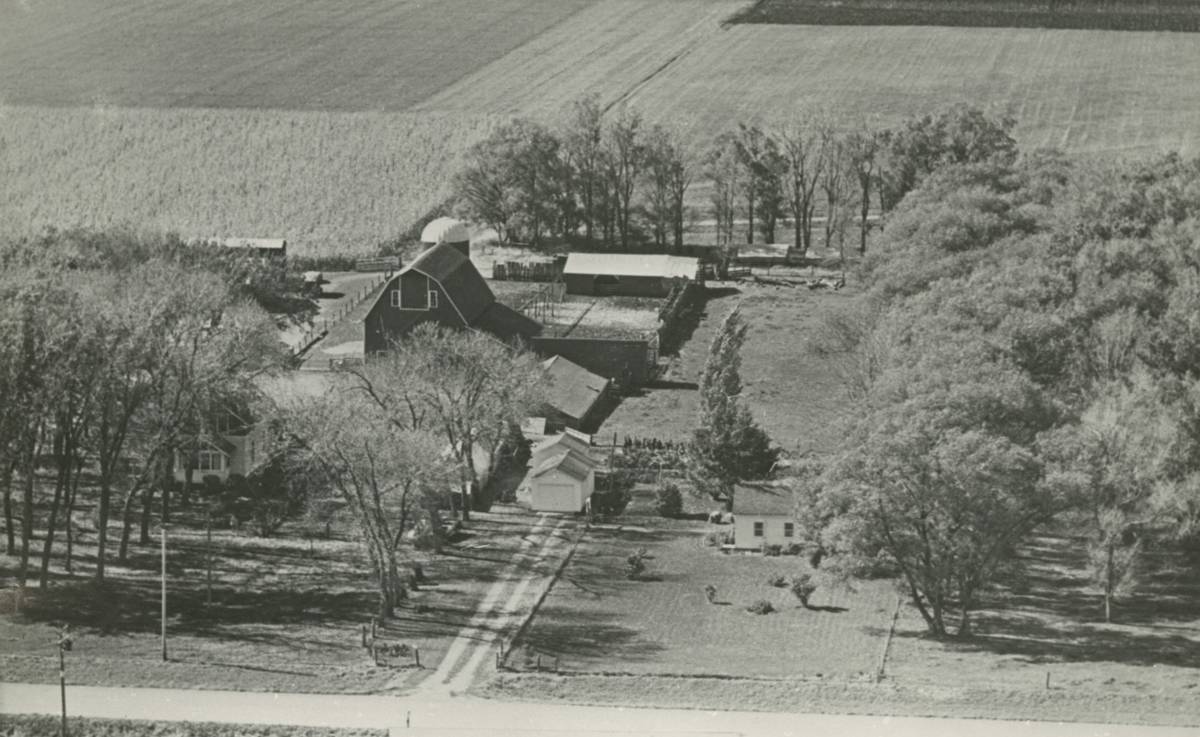
He spent his childhood on a family farm that belonged to the Thramses and then to the Luicks for 105 years, from 1897 to 2002. The farms owned by his maternal grandparents’ parents were in those families for over 150 years each! Their ancestors hailed from the entire British Isles, the Netherlands, Denmark and several Germanic regions. They came to North America as of 1630.[4]
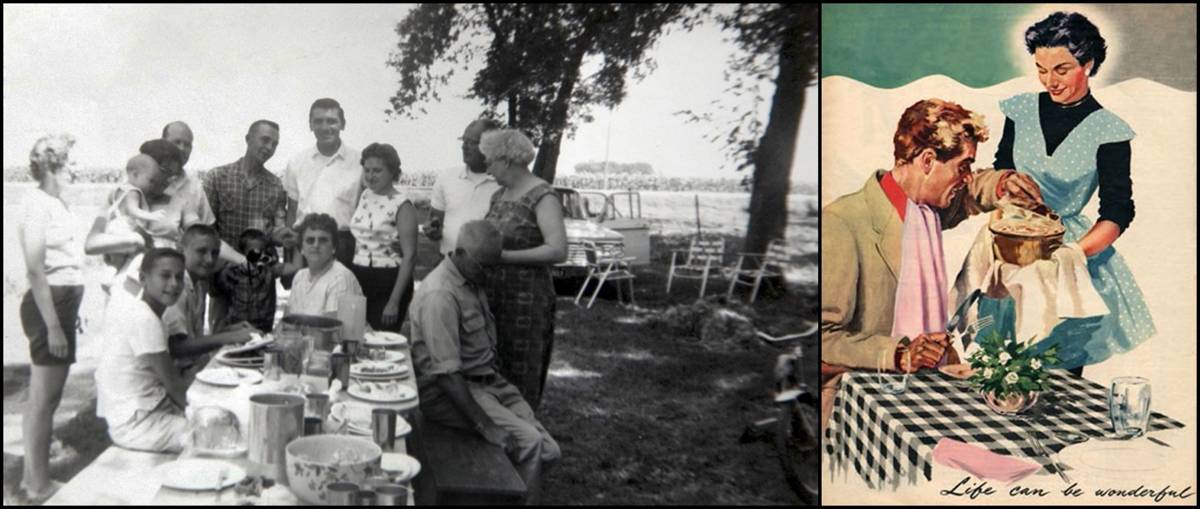
From early childhood on, Michael listened to [hi-]stories that his maternal grandmother—Erma [Florence Falcon] Thrams—told him about the Yankee and German origins of her family and how they moved from the East Coast to the Midwest by flatboats down the Ohio River, then by covered wagons out onto the Iowa prairie. Listening to those stories made Michael interested in how people find themselves in places they call “home”. Later in life, he described how he lacked a sustaining sense of belonging to rural Northcentral Iowa’s social fabric and of possessing full sovereignty as a kid, so wanted to understand how he fit into larger contexts – so to be safe.[3]
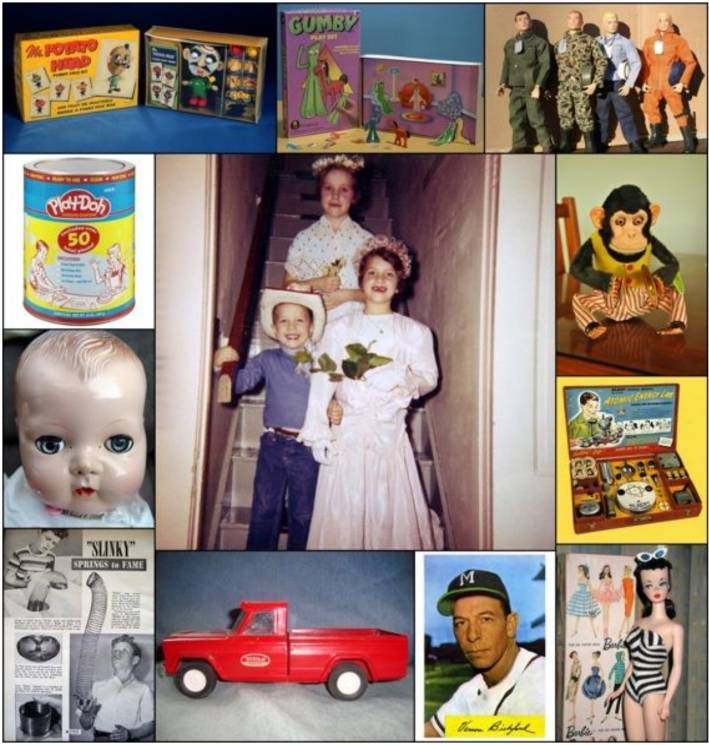
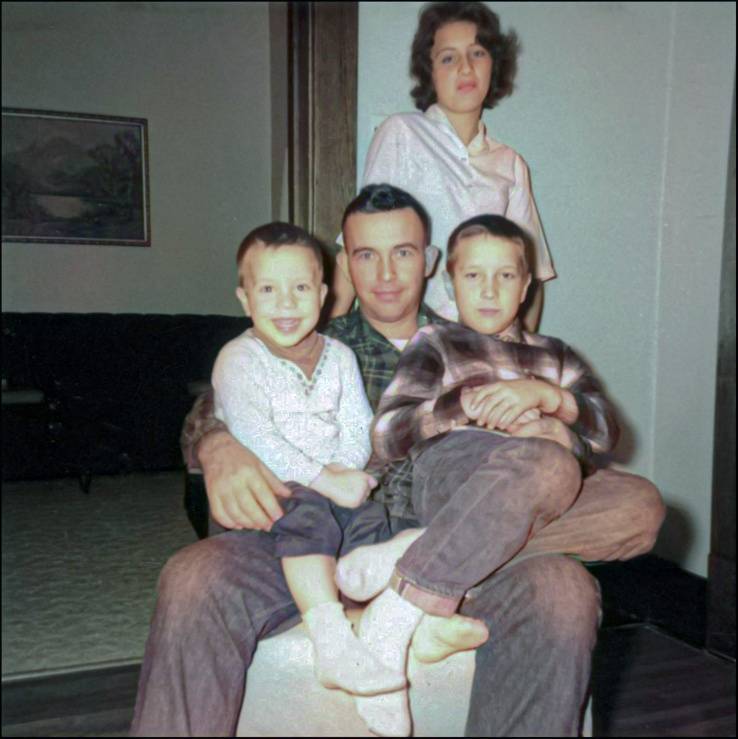
According to Michael, his father did not approve of his interests and belittled his attempts to learn about family history. Bud Luick had a violent, unpredictable temper “that made every hour a landmine;” he often yelled at family members, and hit his sons, hard and without warning. Michael said that it made his childhood miserable and challenging to focus on his passions. At that time, reading during bus rides to and from school, and watching children’s films from around the world on Saturday mornings, became a form of escape for him, even as it awakened in him a desire to see the world.[3] At school, most other children teased him for being “weird”.
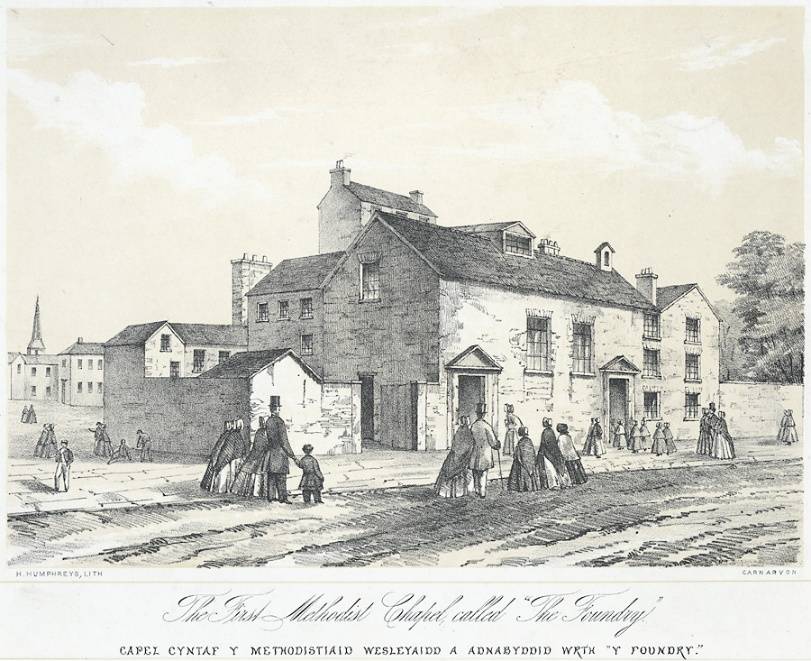
During his childhood and teen years, Michael mirrored the Methodist faith of both sides of his family – if, in many ways, more piously. His mother served as Sunday-school teacher for several years; always put into other teachers’ classes, the eager boy still got the highest marks in Bible competitions and recitations. By the time he reached late teenage, Michael wished to become a pastor, with a special interest in the possibility of serving in refugee camps outside the U.S.A. He took seriously early Methodist tenets such as the “Social Gospel” creed and underlying ideal of equalitarianism, which held that all could earn god’s graces and “salvation” through good works. He also adhered to the founding Wesley brothers’ principles, that one could reform society and one’s self “methodically” – hence the name of the movement, which drew many followers in the American Midwest, in particular among German immigrants and their descendants.
Early consciousness raising
During high school, Michael read The Complete Book of Self-Sufficiency by Brit John Seymour, about how to grow one’s own food and animals, tools, etc. That book and Fritz Schumacher’s Small is Beautiful made him interested in smaller, “human-scale” technologies, as well as soil conservation, solar heating and alternative energy sources. He also became a member of the school debate team, where he delivered speeches about ecology in Iowa—one of which earned him an award.[5] In 1979, at the age of 16, he gave an interview to a local newspaper foreseeing “the end of petroleum”. Michael later said that in those days Iowans did not take such views seriously. The topics brought up in that interview became the basis of his academic report Rural Iowa: Its Past and Some Proposals for Its Future, which he wrote six years later while a student at Iowa State University, and which was published serially in the Des Moines Register.[3]
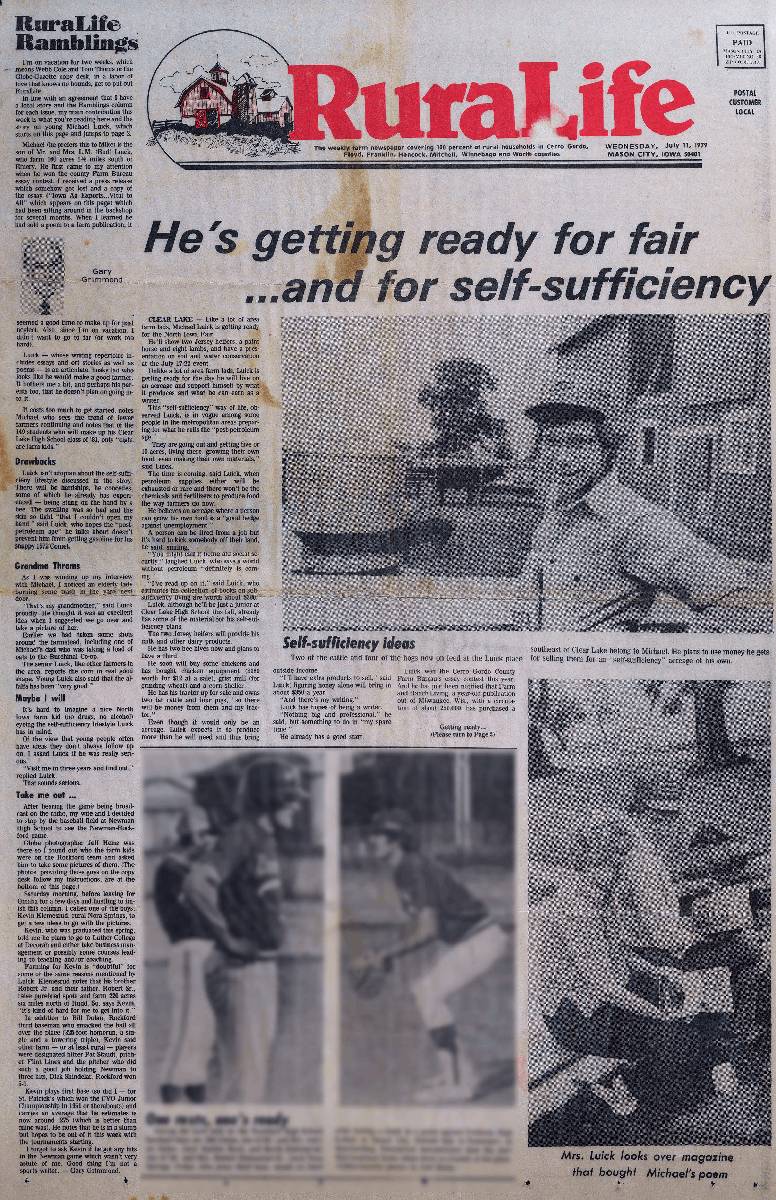
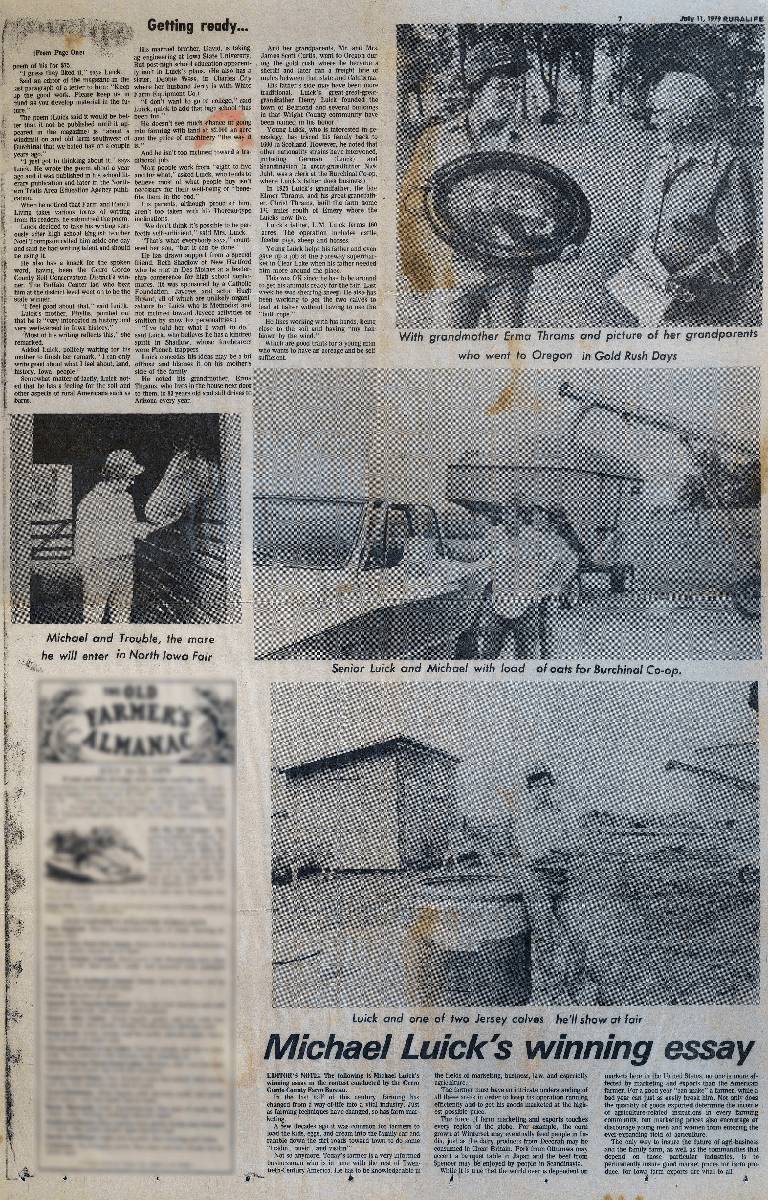

Another interest that Michael reported to have was racism. While his paternal great-grandfather had been a member of the hateful Ku Klux Klan[6], his mother did not approve of racist slurs and as a teenager had had African-American friends. Michael said his mother taught him tolerance despite of another’s skin color or religion, etc., but “her teaching was by example and not direct admonition”—as this story relates: “...Mom [had] two child-minding charges for a few summers. The spirited T[.] girls came from laboring stock. As they had lived in rural Northern California, they ticked differently than we local yokels. One day, sitting in the back seat of the big yellow bus [...] Debbie casually cursed ‘[N-word]’ to which I replied, ‘Debbie, those people are called ‘negroes’!” – a fine lingual difference then considered a polite concession and good manners.[7]
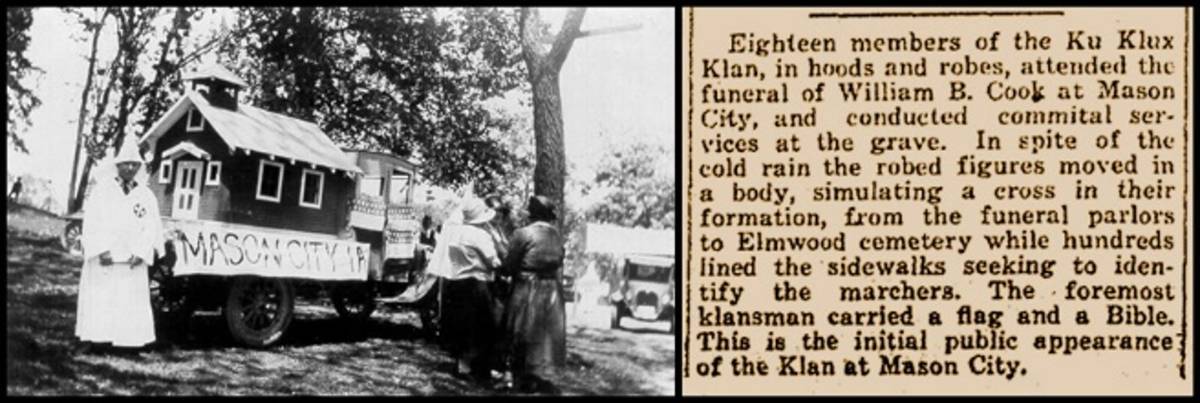
In his book Turkeyfoot: What is Our BIG Problem?, Michael wrote in 2019: When I was a child, we watched on the nightly news as one inner city after the next went up in flames. Too young to understand the dynamics behind the riots, I was sensitive enough to perceive some of the underlying sentiments. That race played a role was clear; that we in the North held whites in the South to be backwards racists did not have to be lectured into me: I absorbed my elders’ prejudices wholly and happily. What a shock (!), then, when some half-century later I discovered that in the 1920s the Midwest had been the short-lived home of hundreds of thousands of KKK members – including my own namesake. It is hard to be self-righteous, indignant and arrogant when one discovers stains on one’s own genes.
Starting teaching career and activism
In the late 1970s, Michael inadvertently embarked on his future teaching career while still in high school, where he self-tasked instructing refugees from Vietnam and Laos[8] who had fled their homelands to escape the grips of murderous regimes. Deciding that Clear Lake High School didn’t provide adequate assistance in teaching English to these recently-arrived pupils, he took it upon himself to help them by discreetly removing discarded books from the school janitor’s closet and conducting weekly English lessons. Unfortunately for the project, his actions didn’t go unnoticed: He was reprimanded by the school’s principal for his unsanctioned efforts, the books were impounded and he was forbidden to offer any further “unauthorized” instruction.
Around the same time, President Jimmy Carter announced compulsory draft registration, which an increasingly politicized Michael—who was in Paris, on a study tour of Europe, at the time of the announcement—concluded that he could not in good conscience comply with: “I’m not going to go to Central America to abuse or kill campesinos who refuse to eat at McDonald’s or shop at WalMart”. During a Clear Lake High School civic-class debate about registration, he wore a black armband to protest registration, as a part of larger “misdirected” US government foreign policies. The next day, many of his fellow students wore red armbands to protest his black one!
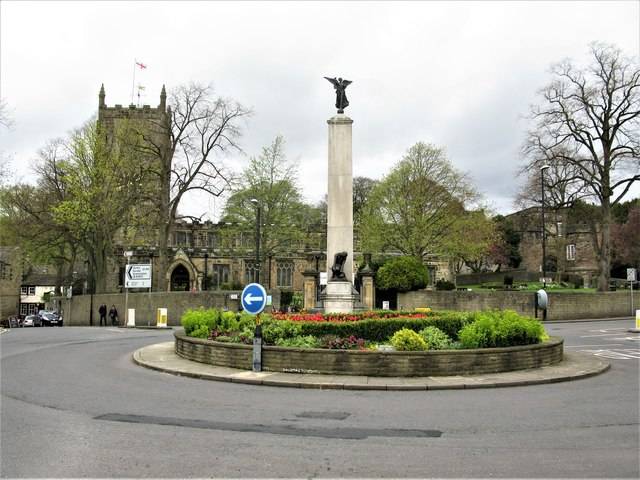
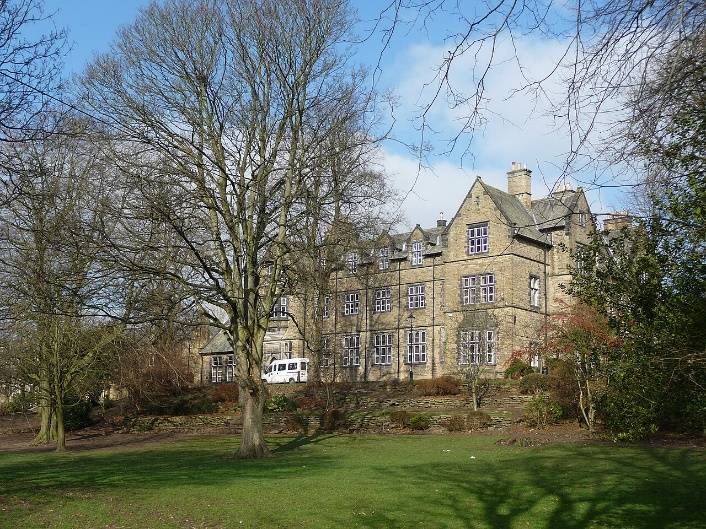
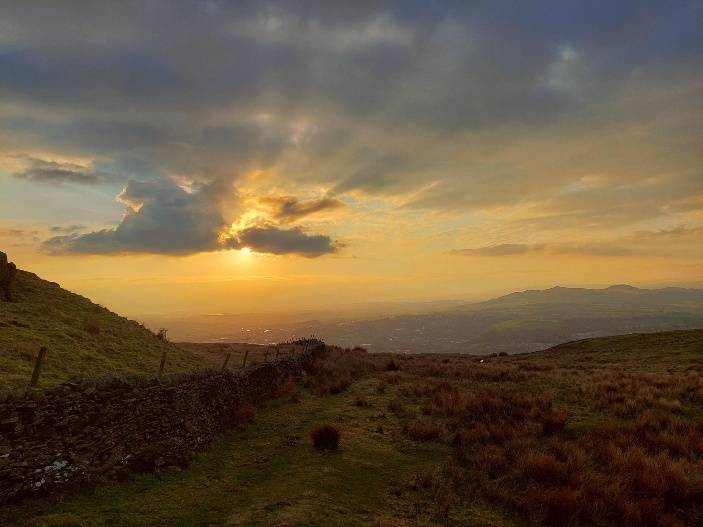
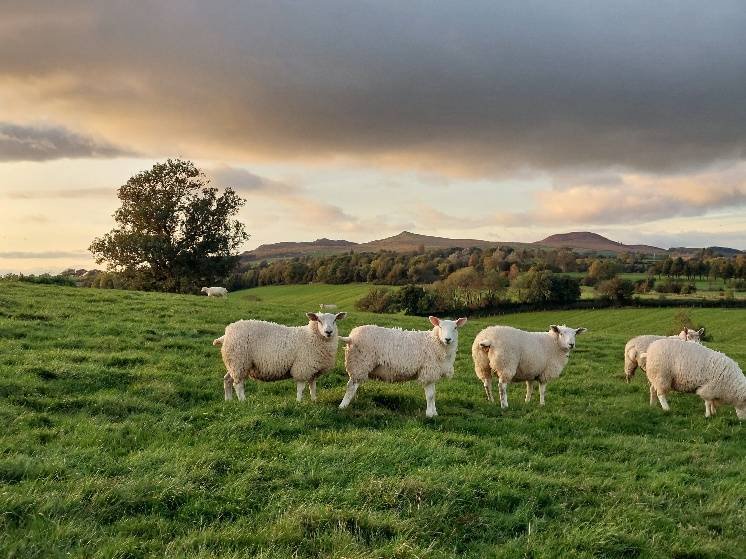
After completing high school, Michael aspired to be an exchange student in South Africa for a year. He held strong disdain of that country’s Apartheid system, however, as he perceived it as being characterized by the dominance of a minority white population over other racial groups. Despite his critical views, he saw the opportunity to learn valuable insights from the country’s political situation, as he sought to understand how societies can veer so drastically from harmonious coexistence and what factors contribute to such unsettling situations.[3] Michael’s plans to study in South Africa were finally blocked, though, due to the unstable, unsafe political climate underlined by disinvestment movements then gaining momentum. As an alternative, he was offered the opportunity to study in England: For a year in 1981 and 1982, Michael resided in Skipton, North Yorkshire [4], where he attended Ermysted’s Grammar School, founded in 1492.
First solo foreign travels
During his year in England, Michael volunteered with Amnesty International to write letters on behalf of imprisoned politicos; he marched in London, at Menwith Hill and elsewhere with CND, the renowned Campaign for Nuclear Disarmament; and became part of a peace group in Bradford, through which he traveled to Leningrad in February 1982. In the spring of that year, he traveled to Germany and Italy, where first he met German cousins in Esslingen, then peace activists in Padova. Later that same year, Michael traveled to Northern Ireland, where he spent a week in rural Ulster, where by night he watched smugglers carry guns and other contraband on boats across a lake from the Republic of Ireland. He toured Britain extensively, staying with friends and calling upon relatives.
By the end of his exchange year, Michael said that he did not want to go to college because he desired to live an “alternative” lifestyle - per the then-BBC hit TV series The Good Life (in the US known as Good Neighbors) - but his visiting mother convinced [he later called it “guilted”] him to continue his education.[3]
Adulthood
Iowa State University campus activism
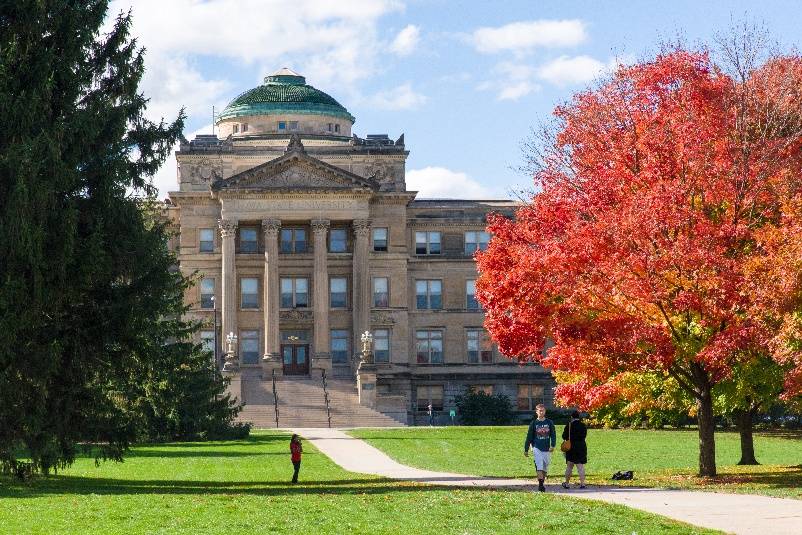
Michael’s unexpected, unwanted educational journey led him to Iowa State University, where he pursued a deeper understanding of world history.[9] His quest for a comprehensive global perspective led him to enroll in courses such as European and Iowa history, as well as diverse, semester-long “intensives” dedicated to African, Latin-American, Asian and Russian history.

At the age of 19, Michael openly embraced his identity as a gay man, becoming one of the few openly gay individuals in Iowa at that time, in autumn 1982. Rather than a trailblazer for gay rights, however, his main focus remained on anti-war efforts and opposition to nuclear-weapon proliferation. Parallel to that, he advocated for environmental awareness and grassroots action.
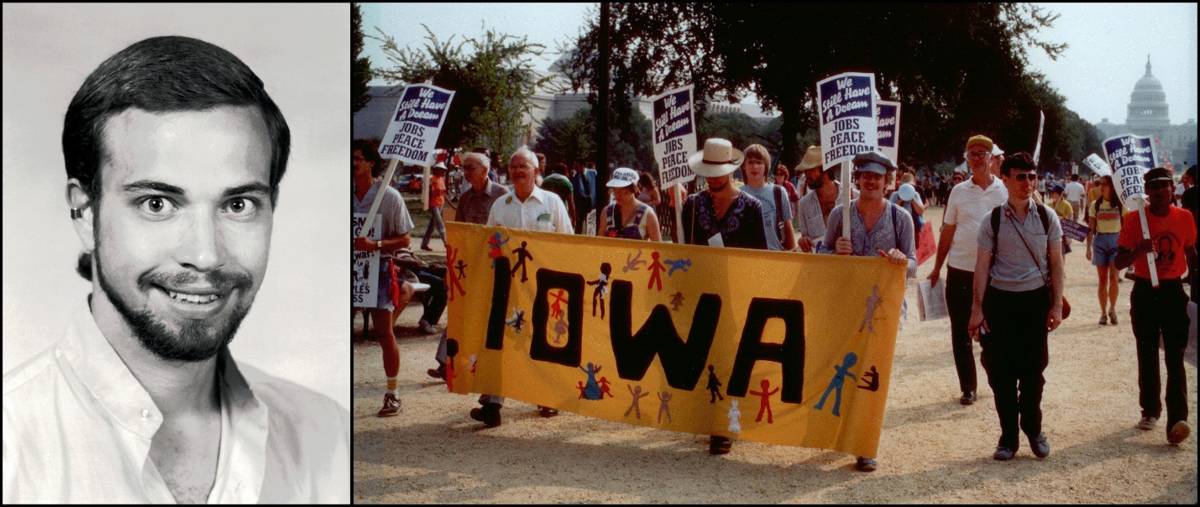
In 1984, Michael ventured to Nicaragua, where he partook in interviews with peasants living under Sandinista rule. Immediately prior to that, he had traveled to Mexico to participate in a Spanish language camp. His interest in U.S. policies concerning El Salvador and Honduras drove him to actively engage with the sociopolitical wellbeing of the region, and travel around it.[4] Back in Ames, he wrote, then raised contributed funds to print pamphlets about the history and contemporary realities of the region. Often, he distributed them on central campus, where he regularly spoke publicly between classes about current events and students’ “moral obligation to respond to the challenges of our time”: He quickly became a controversial, polarizing figure.
During this period, as an outgrowth of his being actively engaged in various anti-nuclear and peace movements, Michael hosted German peaceniks who had come to Central Iowa to speak about their opposition to the placing of US rockets in their country, seen by many Europeans as destabilizing and even pre-emptive in nature. As several guests were members of the emerging German Green Party, Michael began to eagerly watch developments there and in the U.S. In the summer of 1984, he attended a conference at Macalester College in Saint Paul, Minnesota, to help establish an American Green Party: He found the later mixed results sobering yet edifying.

Initial attempt to emigrate
Michael’s interactions with the German-Green activists he had met fueled a growing desire to return to Germany and potentially settle there. Upon completing his undergraduate studies at ISU in May 1985 (and not even waiting ten intervening days to attend graduation ceremonies), Michael made what would prove to be only an initial attempt to move to Germany. Benefitting from an unusually favorable dollar-to-mark exchange rate, he could sustain himself financially for a period of three months without having to find an income. He said he was “free, but poor”.
Throughout those months, Michael embarked on journeys with a German au pair whom he had befriended in Decorah, Iowa, across Scandinavian countries, on a Eurail pass. In the middle, he embarked on one side trip to the Soviet Union[10], as a delegate in an American student peace group. Within one month, he toured Kyiv, Odesa, Moscow, Zagorsk, Novgorod and Leningrad. A second side trip took him across the so-called “German Democratic Republic” and to East Berlin.
While in Germany, Michael tried to secure long-term employment as an English teacher in or near Stuttgart, the historical home of his Luick ancestors. However, despite his efforts, he did not find a job, compelling him to return to his native Midwest. Wanting to be “near, but not too close” to his family, he chose to located in Minneapolis-Saint Paul, Minnesota, in the heart of his “beloved” Upper Midwest.[3] He reported feeling “lost and very alone those first months back”.
Experiencing “shared living”
In the Twin Cities, Michael lived for a school year by himself in an apartment in the Seward neighborhood of Southeast Minneapolis, during which he worked as a tuxedoed waiter at the Minneapolis Club, “serving Minnesota’s elite”. Then, he discovered a commune called Omega House, and in the late spring of 1986 he moved into it. (He had encountered “shared living” at the Mennonite Student Center in Ames, Iowa, as a student.) The inhabitants of the commune were people of different ages and nationalities, with usually five to nine people living there at a given time. Michael wrote later that this was different from his blood-family life because in the commune everyone was encouraged to talk about their feelings openly and peaceably coexist.[3]
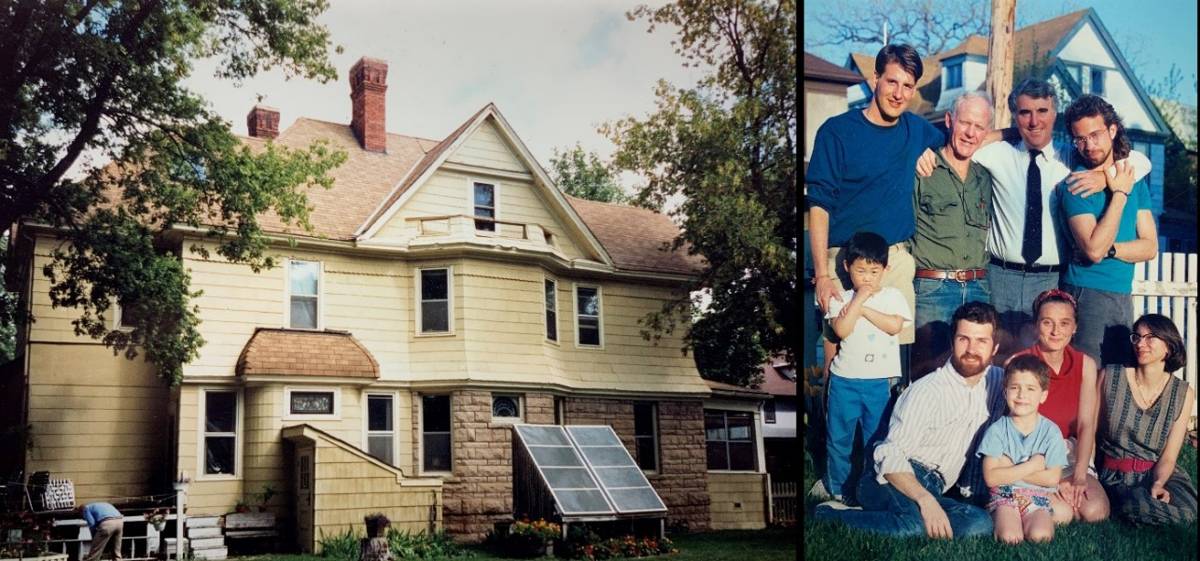
Omega House was founded in the sixties by a group of “hippie” University of Minnesota psychology graduate students. Their goal was to find a way to learn “to live better together”. Michael was intrigued by the idea of openly discussing his inner landscape and saw this as an opportunity to learn and grow personally. He stayed four years, evolving till the end.[4] To support himself, he worked as a gardener and pet-grave digger, an overnight/weekend senior-minder, an (often nude) model for university art classes; ultimately, he started his own exterior-interior house-painting business for fellow Quakers, to avoid paying taxes to fund wars. Omega owned a half-square-mile of partially virgin woodland in northwest Wisconsin, which he loved.
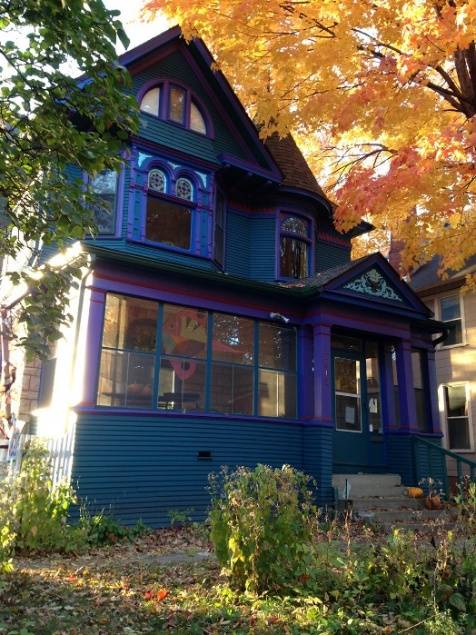
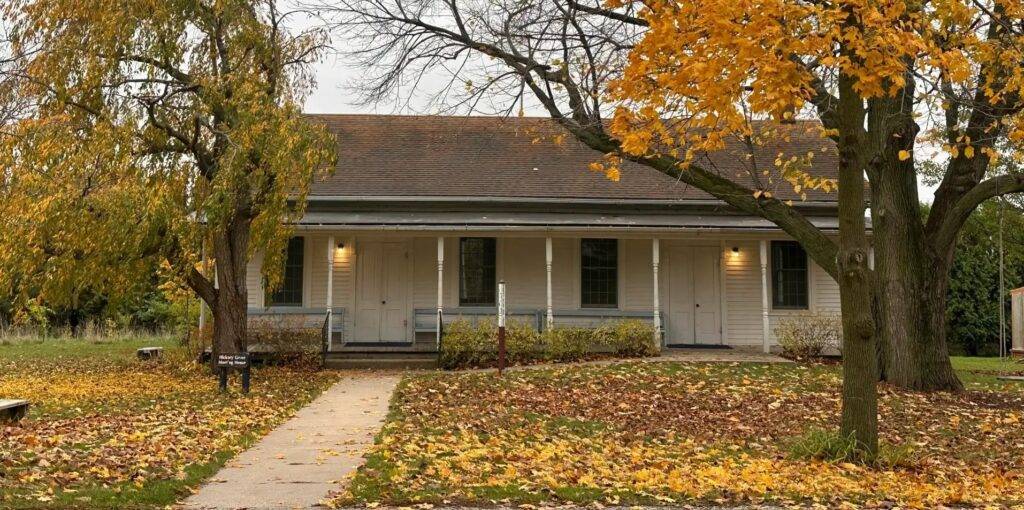
As he had done while an ISU undergraduate student in Ames, Iowa, among Minnesota Quakers Michael continued to practice activism (e.g., serving meals at the “Little Reservation” for Native Americans in downtown Minneapolis, going on marches against discrimination, etc.), but also deepened his spiritual ties, by attending workshops, seminars and lectures (one held at the celebrated Guthrie Theater, given by Quaker therapist M. Scott Peck, at the time famous for his groundbreaking book, The Road Less Traveled and its spinoffs). In addition to regularly attending Twin Cities Friends Meeting in Saint Paul, Michael joined several Quaker midweek social groups.
Resuming advanced education
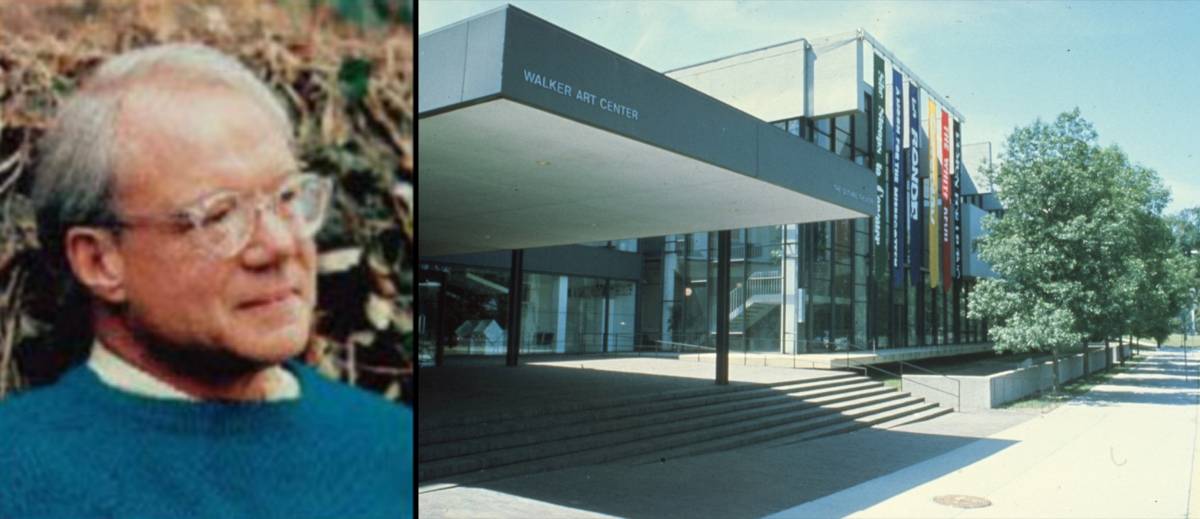
After three years in the commune, Michael enrolled as a graduate student in Goddard College in Vermont.[11] There, students were allowed to name their degree: Michael chose “Cultural and Social History”. He focused on the Third Reich—specifically, 11 Americans who either lived and worked or extensively traveled there during Nazi rule or just after it ended, 1933-48. Some examples: The 11 subjects included a graduate student in Germany before WWII started, who had gone to East Prussia to visit relatives; there were people with different contexts: diplomats, journalists, businesspeople, and a Quaker relief worker, Leonard Kenworthy, who had lived a year in Nazi Germany in Berlin, helping Jews get the means to flee the growing danger to them.
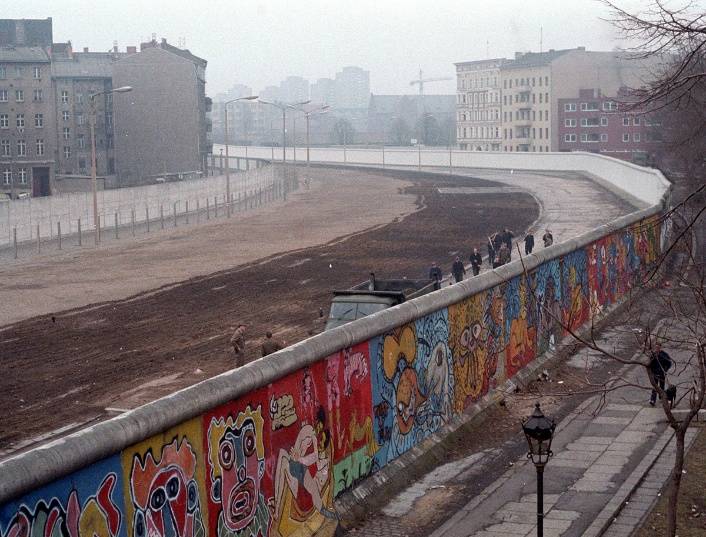
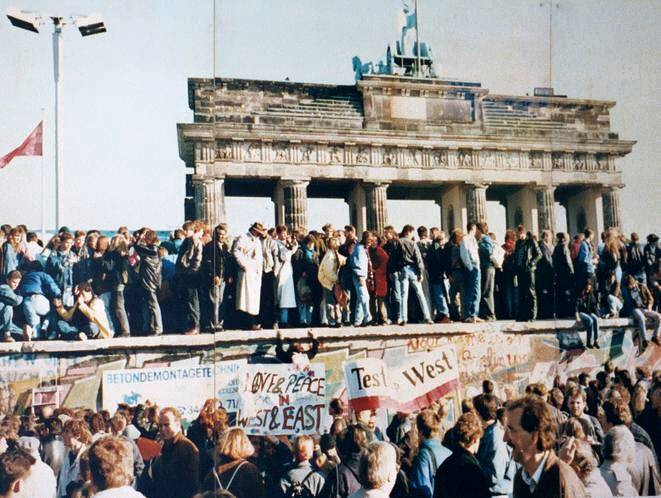
At the same time, Michael worked as a concierge in a German restaurant, the Black Forest. One morning, he opened the newspaper and was shocked to read that the Berlin wall had fallen —headlines and photos he at first suspected to be a hoax. After just a couple of minutes, Michael knew that this historical event would very soon shape not just his, but the whole world’s future.
During his studies at Goddard, Michael had two advisers who deeply and lastingly changed his view of the world and of learning/education themselves: Dan Chodorkoff and Steve Shapiro, who respectively were teaching cultural anthropology and pedagogy. As a backup degree, Michael also earned secondary-education certification as an English and history teacher.[3]
Teaching in Czechoslovakia and moving to Germany[12]
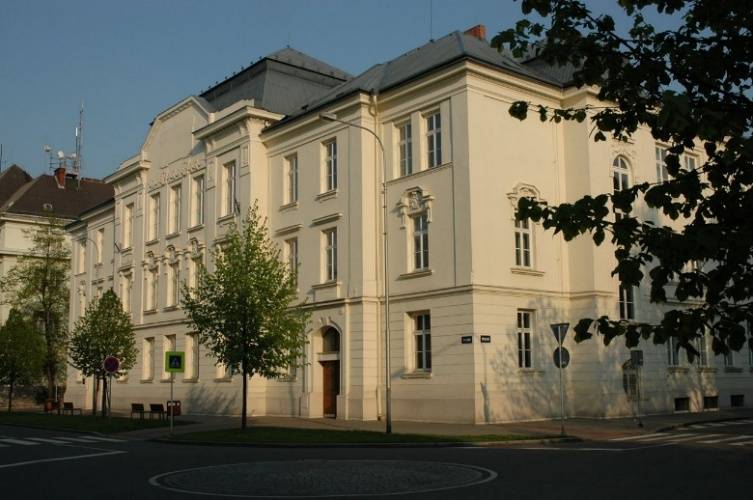
After graduating, Michael went to Czechoslovakia to teach English, pedagogy and history for two years at Ostravská Univerzita. Michael found adapting to life in Czechoslovakia extremely challenging, however, so after a few months decided to visit a friend in Nürnberg, Germany, as a “long-weekend escape”. It was during this visit that Michael met Wolfgang, with whom he fell in love and who within months moved to Ostrava to be together. Subsequently, Michael made the life-changing decision to later move to Germany to be with Wolfgang, as soon as chance arose.
Paid a US-competitive salary, but in Czech crowns – on which there were then few consumer goods to spend them – Michael (and, for one of his two years living near Ostrava, accompanied by Wolfgang) used his “cash-to-burn” to buy tickets to travel a month in Israel-Egypt, then a month in India… and thus started his wont to travel irregularly, but for longer – spending about a month each in, for example: Australia-New Zealand; Chile-Argentina; South Africa; Thailand-Southeastern Asia; Quebec and New England… so that by October 2026, he had toured all European countries except Andorra, San Marino and Iceland; most of Brazil plus Colombia and Peru; Central America extensively; the Maghreb except for Algeria and Libya; and “communist” countries of Soviet Union (1982 and 1985)/Russia (1994), Cuba, China and for a month Vietnam.
When Michael’s two-year teaching assignment in Czechoslovakia concluded in 1993, he moved to Berlin to be with Wolfgang. Initially on a tourist visa that allowed a three-month stay, he sought a way to extend his stay in Germany. As a solution, he enrolled to be a “ghost student” at Berlin’s Humboldt Universität, supposedly to pursue a Ph.D. in Modern Europe History[9].
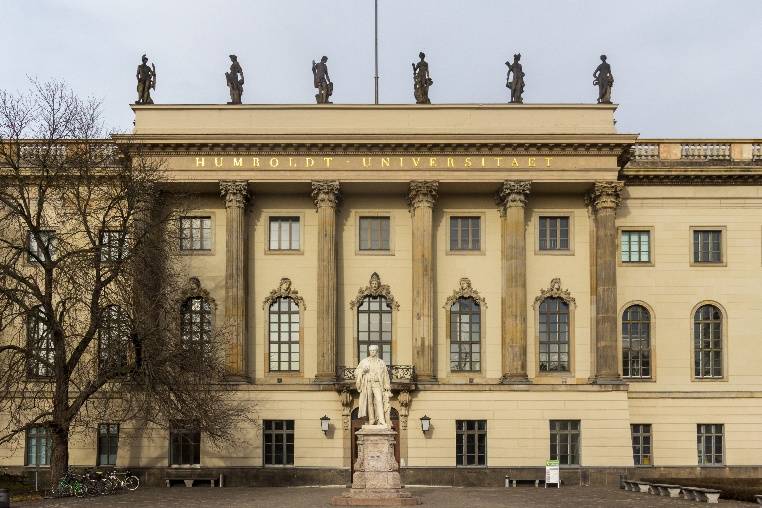
During his admission interview, the committee inquired about the topic for his dissertation. At that moment, Michael spontaneously remembered an encounter from some ten years prior with Robert Berquist, a former staff member at the Quaker-run Scattergood School and—unbeknownst to Michael—during World War II at Scattergood Hostel. Robert had briefly told Michael of the hostel’s history while the two were standing in a lunch line at the Quaker Iowa Yearly Meeting (Conservative) in Whittier, Iowa, in summer 1982: Michael then forgot the encounter for more than a decade. The hostel, situated near West Branch, Iowa, had been a retrofitted boarding school that had provided a safe haven, English language education and job opportunities to 185 refugees fleeing Nazi-occupied Europe during World War II[13]. Captivated by the hostel’s story once the interview reminded him of it, Michael decided to base his entire dissertation on the topic of WWII-era refugee integration.[14]
Immortalizing Scattergood Hostel[15]
When Michael contacted Robert, the retired teacher provided Michael with about 45 addresses of former Scattergood refugees and staff to assist him in his work. Michael wrote letters to these people, and without exception they replied, along with articles, diary entries and photographs. Meanwhile, Robert discovered about another 1000 pages of kitchen meal plans, office memos, press copy and, significantly, essays from English lessons about refugees’ journeys to the US, which, along with the other 1000 pages from the refugees, was a “gold mine for a historian”.[3]
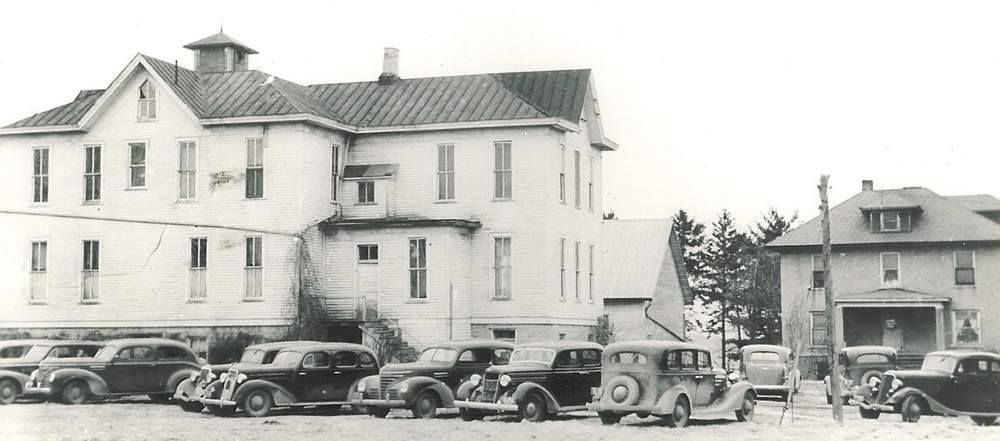
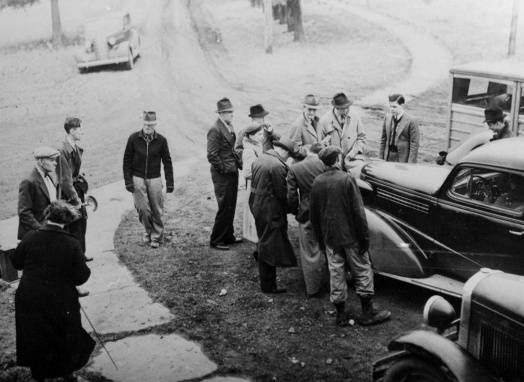
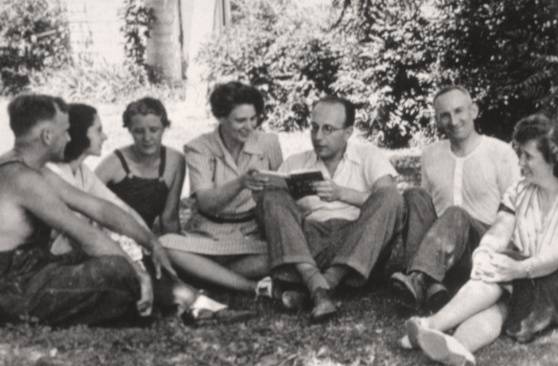
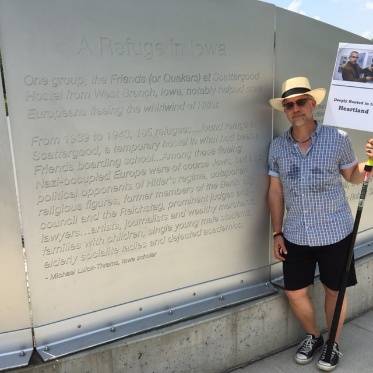
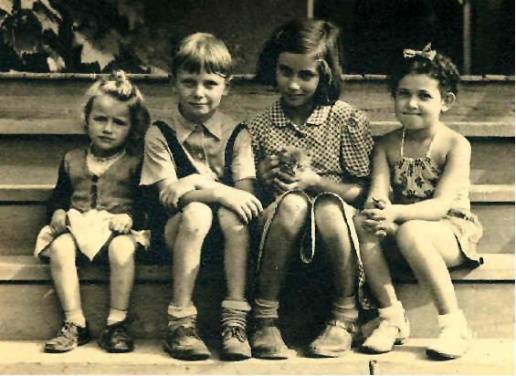
clockwise, from upper left: Scattergood’s Main building, 1939; the arrival of the first “guests”, 15 April 1939, surrounded by Quaker hosts and Iowa journalists; refugee children (from left) Annette Keller, Louis and Edith Lichtenstein, and an unidentified girl, summer 1942; Michael Luick-Thrams taking a shaded break on the Iowa Statehouse grounds from 100+ degree (Fahrenheit; 38 Celsius) heat during the 2016 Iowa Gay Pride Parade, in front of the State of Iowa Holocaust memorial quoting his book Out of Hitler’s Reach; volunteer Betty Forman (center) coaching refugees in English in the shade under one of Scattergood’s front lawn trees, summer 1940
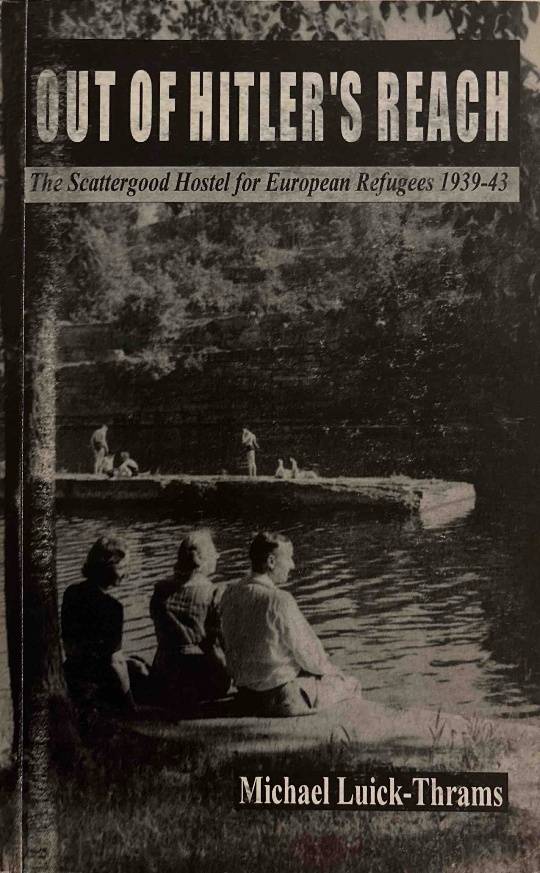
Michael then received scholarships from the Berliner Senate [16], which he used to travel twice to the US and interview his sources. From the information he gathered, he wrote a dissertation as well as a book titled Out of Hitler’s Reach: The Scattergood Hostel for European Refugees 1939–43. To this day, it remains the only book on the topic and has even inspired short films and several exhibits—and, it completely changed the author’s life. The book delves into the lives, work, relationships among the refugees, and their integration into American society.
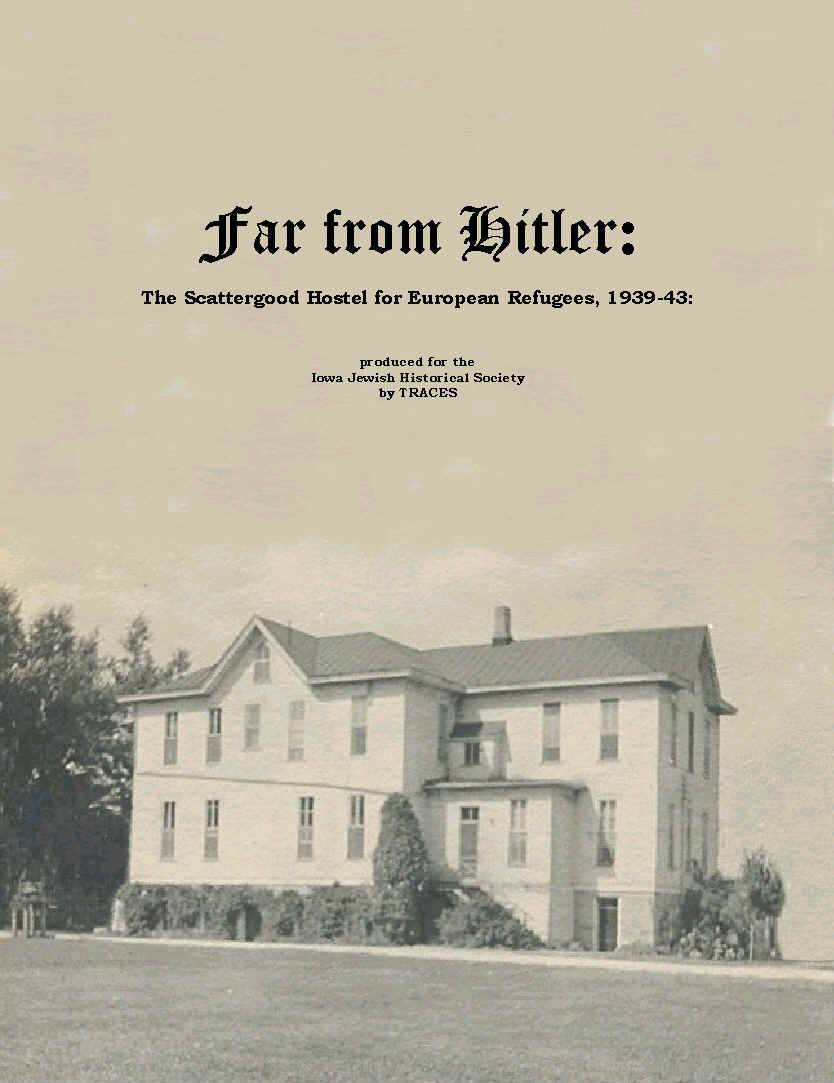
After obtaining his PhD from Humboldt,[17] Michael embarked on seven tours across Germany with a film team to interview 50 former prisoners of war at Camp Algona (Iowa). At that point, he was mainly interested in the experiences of “German soldiers who sent refugees packing”. Later, as of 2003, he created several books and exhibit catalogs, including Far from Hitler: The Scattergood Hostel for European Refugees, 1939-43, which he launched at the Iowa Jewish Historical Society’s Caspe Gallery on 9 November, the 65th anniversary of “Kristallnacht”.
Following instruction from his father (after the two had concluded eight years of no contact), Michael also conducted interviews with 50 Iowa or other Midwest POWs and compared their experiences with those of the German POWs. For Michael, it has always been essential to view history from a sociological and anthropological perspective, rather than analyzing state history and politics in isolation from people’s daily-life experiences. He was particularly curious about the atmosphere of these camps, where circumstances forced one-time “enemies” to actually live together, although “normally they ‘should’ have been aiming their guns at each other”.[18]
Michael’s following research centered on some 15,000 German civilians imprisoned in 60 camps scattered around the United States between 1941 and 1948, many of whom were already progressing towards earning citizenship; and later, unexpectedly, the fates of US citizens interned in Nazi-occupied Europe. In the process, interviewees contributed myriad objects, such as photos, diaries, letters, violins, decks of cards, and pipes—which now mostly belong to museums in Iowa as long-term deposits. With all this material, he decided to start a museum.
Launching TRACES Center and the “BUS-eum”[19][20]
On September 11th 2001, Michael had an appointment to register his brainchild “TRACES Center of History and Culture” as a non-profit organization with Iowa’s Secretary of State, with the aim of preserving all these traces of quickly-fading histories, in a last-chance effort while the remaining witnesses were still alive. By coincidence, on the morning of the appointed day, he—along with his relatives and friends—was shocked to hear the news about the terror attacks on the World Trade Center and Pentagon, an event which, like the fall of the Berlin Wall, Michael immediately realized would have a huge, indelible and irreversible impact on the world.
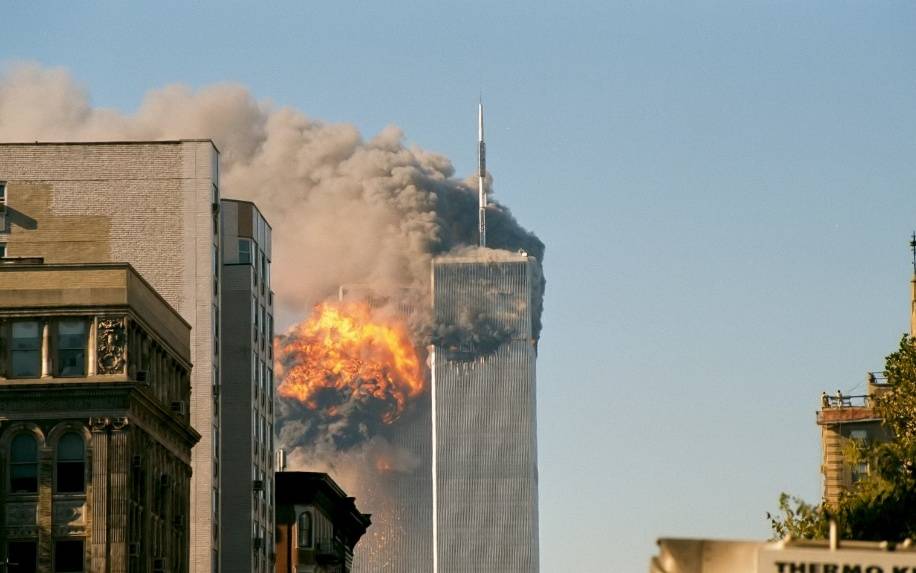
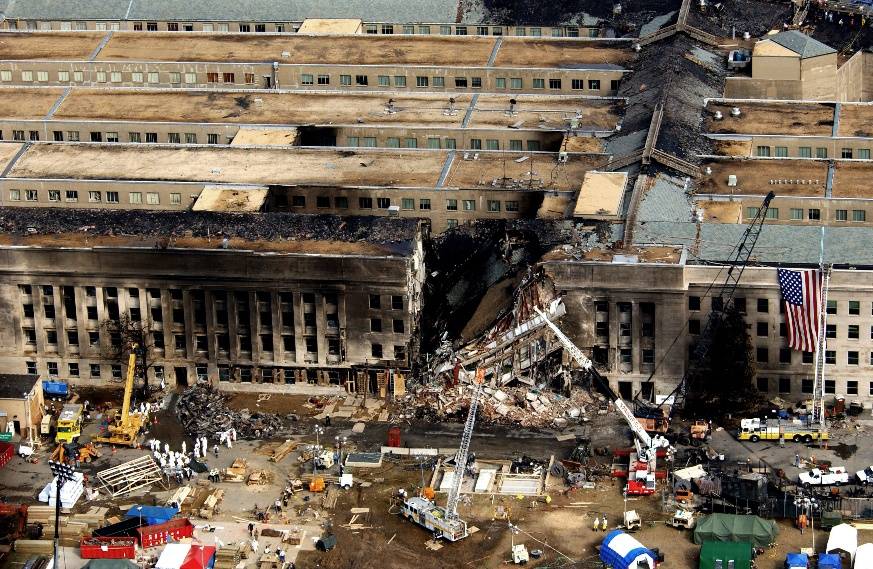
As one of the consequences of the terror attacks, the Iowa Department of Cultural Affairs offered an $8,000 grant called the Spirit of America Award. After winning it, volunteers and Michael’s first paid staff used the funds to create a slide show about American POWs in the Third Reich. He later compiled these stories into a booklet titled Behind Barbed Wire: Midwest POWs in Nazi Germany. Gradually, Michael and his supporters earned a more consistent and significant “seed money” profit, which allowed them to curate, then carry out several exhibits.
Michael recalls a moment when he was flying from Germany to the US and, looking out of the window, saw many school buses parked in a lot—“like so many tiny yellow ants gathered head-on around mounds of sweetness!” That inspired him to come up with the idea of buying an old school bus and transforming it into a museum, which he dubbed the “BUS-eum”.
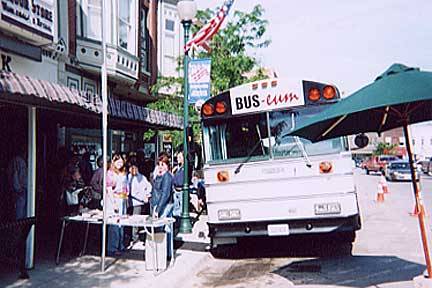
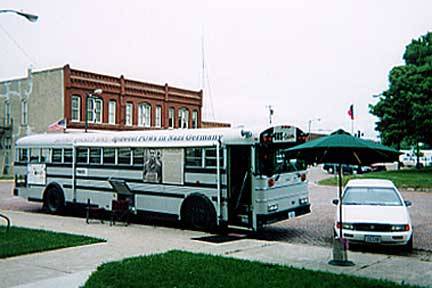
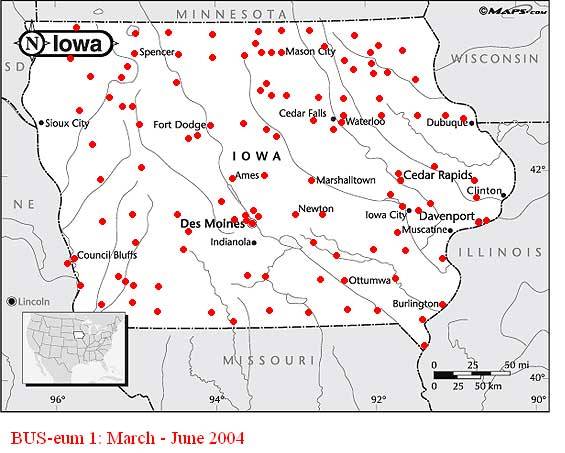
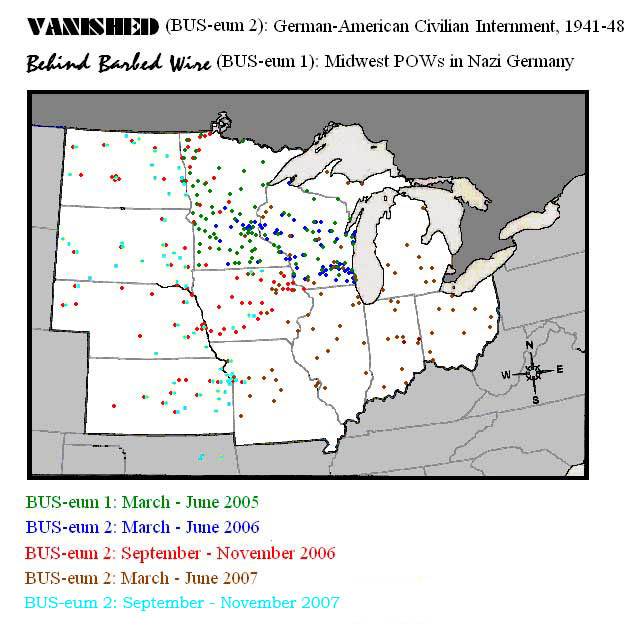
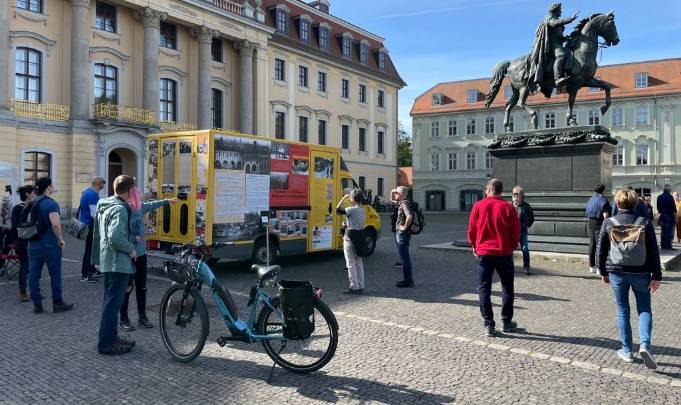
The first stationary home for TRACES’ diverse projects found realization as the “Center for History and Culture” in Saint Paul, Minnesota, which operated for 37 months. Today, such work continues via the “BUS-eum” and “History Mobile”, mobile museums that respectively traverse various regions of the USA and Europe. As of now, these educational “vehicles” have been on the road over hundreds of thousands of miles/kilometers—the BUS-eum to all 12 of the US’ Midwest states (during which it was even a topic of an above-the-fold, front-page article in the Chicago Tribune;[21] the last tour [as of October 2026] was in the first half of 2023[22][23]); the History Mobile continues to ply the highways and byways of Europe, each of recent years.
Burr Oak Center
As a short-lived experiment, TRACES’ ecological side project centered around the planned Burr Oak Center for Durable Culture, a home for “TRACES of Green”, an educational and service project launched in 2008, upon discovery of the possible purchase of an organic family farm for sale after over 150 years of being in one family. The vision drew inspiration from the mixed history of European settlement around the world, but especially in the environmentally-compromised Midwest, to conceptualize and work towards more sustainable, livable futures.[24]

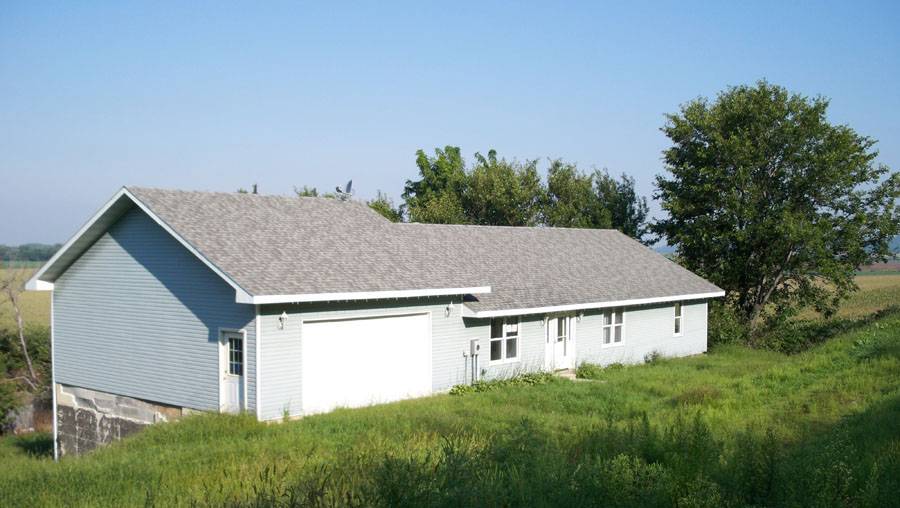
In 2009, Michael, a core staff and the first of a revolving roster of volunteers moved to a big house with an oversized lot in Turin, Iowa, on which property the idea of the Burr Oak Center and thus TRACES of Green might take root. In pursuit of their vision, TRACES acquired two vacant homes in Turin, transforming them into a community/training center. They also aspired to become custodians of a nearby agricultural property, to be known as “Burr Oak Farm”. This farm would have served as a locally grown, organic truck farm, providing student-interns with hands-on learning opportunities.[25] Together, the campus and farm would have served as a tangible manifestation of TRACES’ intangible goals, serving as a meeting place where ideas take shape and a more humane, sustainable way of life might flourish. Unfortunately, the heirs of the nearby family farm chose to sell it to the county. And, one of the staff proved to be a lying thief.
Re-emigrating to Europe
In 2011, upon the unexpected collapse – and hollowing out, by a devious staff member - of the Burr Oak Center project, Michael launched a significant and targeted third effort to permanently immigrate to Germany, this time boarding in Newark, New Jersey a containership named Hanjin-Palermo. That 16-day “big-boat ride” would play a pivotal role in shaping his life ahead.
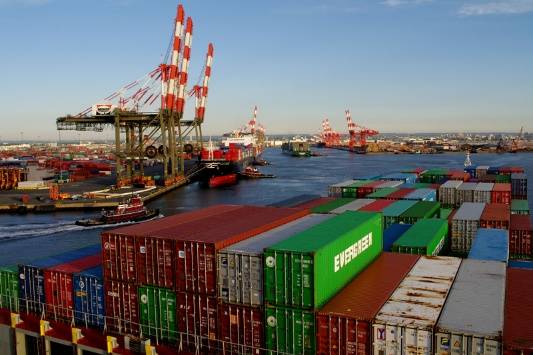
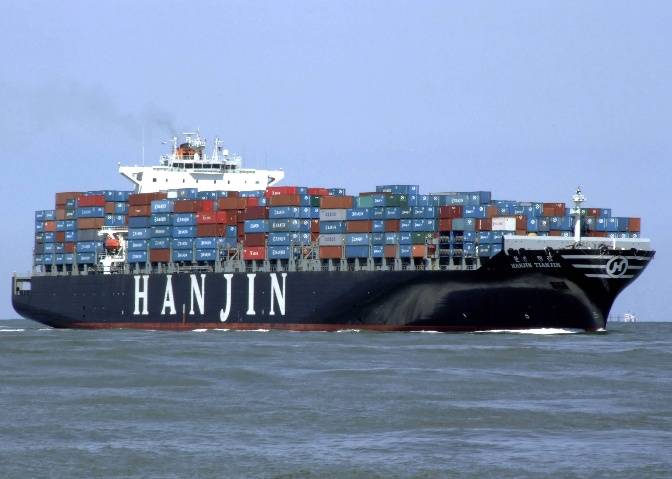
During the voyage, Michael had the opportunity to interact with several individuals, including Andy, a personal assistant to renowned physicist Stephen Hawking, and Marie, an adventurous social worker from Quebec, just starting on a year-long trip around the world, taking her across the former Soviet Union, India, Southeast Asia... They connected on deep levels, shared of their interests and experiences, and spent evenings together watching a Michael Moore series and various movies, which Michael had purchased as DVDs back in Minnesota before setting off on an AmTrak train from Saint Paul to New York.[3] He also took 16 bottles of dry red wine.
The voyage, though, was not without incidents with lasting impact: Michael witnessed aboard a distasteful hierarchy, according to which the white passengers ate from crystal stemware and fine porcelain in the captain’s dining room [the entire piloting crew were Germans], whereas the Filipinos—according to Michael the hardest working of all, as the freight and mechanical workers—had to eat downstairs out of common pots, served in plasticware on plywood tables.
After having some motor problems in Antwerp, 16 days later the ship finally arrived in Bremerhaven, where Ex-Boyfriend awaited Michael in a borrowed car. At that point, Michael’s financial situation was precarious, as he had only 50 Euros in-hand. In search of stability and a fresh start, Ex-Holm drove him to Hessen to find a refuge in Villa Locomuna, a commune located in Kassel, where Michael spent a few months finding a footing upon which to rebuild his life.[3]
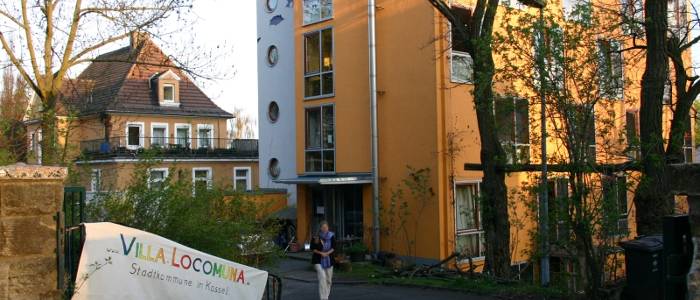
In Germany, Michael again searched for a job as a teacher. He cites an incident when his New-York-bound AmTrak coming to Saint Paul had been delayed 18 hours—and it was only due to this delay that he could receive a phone call from a Waldorf school near Stuttgart, offering him a teaching position. Michael spent a year teaching at what he later called “Teufelstal”, where he grew bitterly dissatisfied with its philosophy, so chose not to renew his contract.[4] Afterward, he taught at three private schools in Berlin, Frankfurt and Dresden, but did not completely enjoy the experiences, although he learned a great deal. Deciding to cease fulltime teaching in secondary education, he returned to Iowa to participate in the 2016 senatorial elections.[4]
US Senate campaign[26]
Despite not having expectations to win, Michael embarked on a campaign with the primary goal of drawing public attention to the long-standing tenure of Chuck Grassley, who had held office since 1981, when Michael was a high schooler. Additionally, he sought to raise awareness about ecological issues, including global warming, soil and water pollution, and rural degradation.[27]
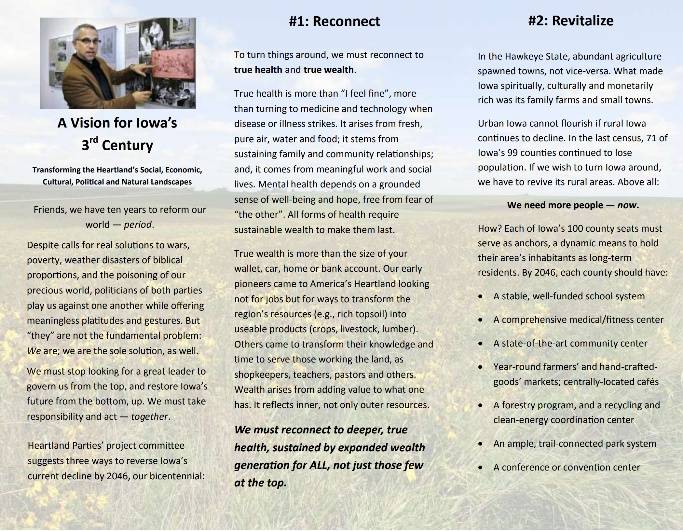
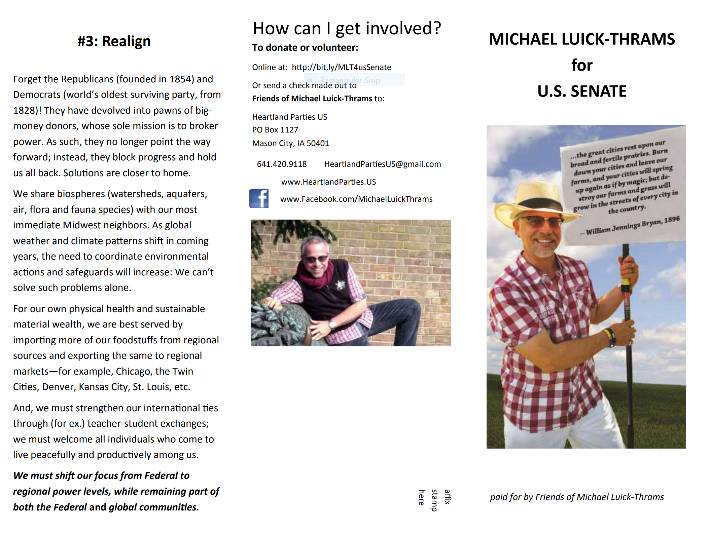
Michael’s voter base consisted of folks supportive of grassroots politics and supportive of deep social change. Those who signed the requisite petitions to earn him bona fide candidate status included: Quakers attending the memorial service of a Des Moines activist; attendees of a Des Moines Gay Men’s Chorus concert at a Unitarian-Universalist church, Iowa’s capital-city gay bars, and students at ISU, U of I, Luther and Coe and Cornell Colleges, etc.
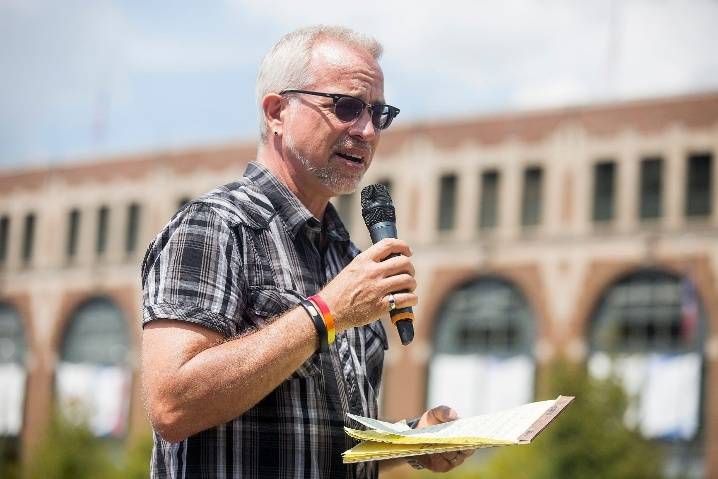
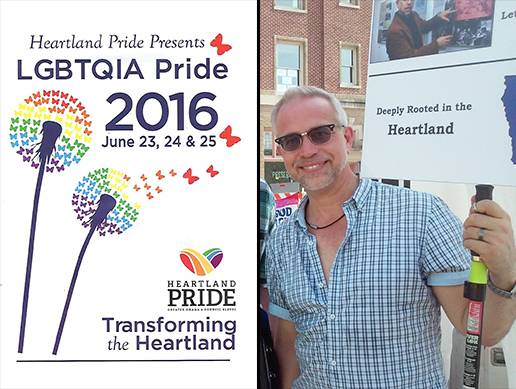
Michael reported that he was “intentionally and literally brushed aside and upstaged” by a Democratic Party candidate at one event; and, the only consistent big-circulation print-media coverage was by the Cedar Rapids Gazette. He tired of constantly searching for potential allies; after complaining at the Des Moines Register for not being mentioned in the media, despite the two main candidates’ almost every move being reported, he was told the following: “That’s different, they’re real—I mean, mainstream—candidates”. Subsequently, he and the Libertarian candidate picketed on sidewalks outside of DMR offices—a legal, constitutionally-guaranteed right; despite that, 13 police officers descended on the two picketeers, in eight police vehicles, including a paddy wagon. Having made their point, the two protesters then drove to Sioux City, where they planned to disrupt the sole Iowa US-Senate debate that evening but soon decided—while sitting in the auditorium—to abort their plans out of fear of possible physical danger. They had planned to chant during the debate: “We’re on the ballot - why aren’t we on the stage?!”
In the end, Michael got 4,441 votes, 0.29% of the total, and thus did not become a US Senator from Iowa.[4] As of October 2026, Charles Grassley is 93 years old and has occupied Iowa’s U.S. Senate since 1981 – the year Michael graduated from Clear Lake High School. According to Wikipedia, he “is considered one of the most powerful politicians in the Senate”.
Move to Thüringen
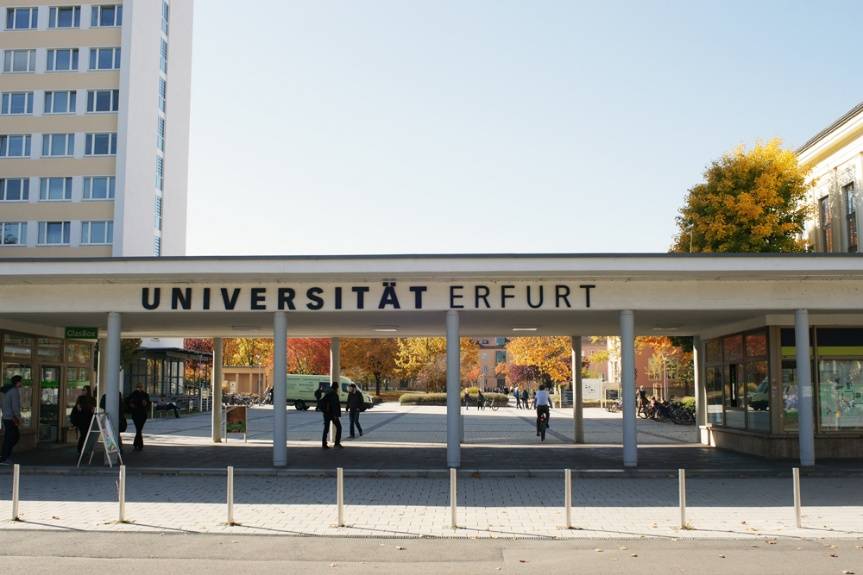
After the senatorial elections, in 2017 Michael decided to move together with a longtime friend, university professor Jörg Seiler. After four years in Dresden, his new home was now in Erfurt, Thüringen’s capital, where for several years he taught social-history-focused courses at the Universität Erfurt—later parallel to directing the Haus der Spuren; guest-lecturing at educational or cultural institutions; showing the BUS-eum in the Midwest and the History Mobile in Europe; etc. Several Uni-Erfurt students completed internships at Haus der Spuren, where they and their Workaway counterparts – for ex. – researched historical topics; located related documentation, photos or artwork; designed exhibit panels featuring their findings, then presented them to the public; and contributed to TRACES-Spuren’s comprehensive website - including this biography.
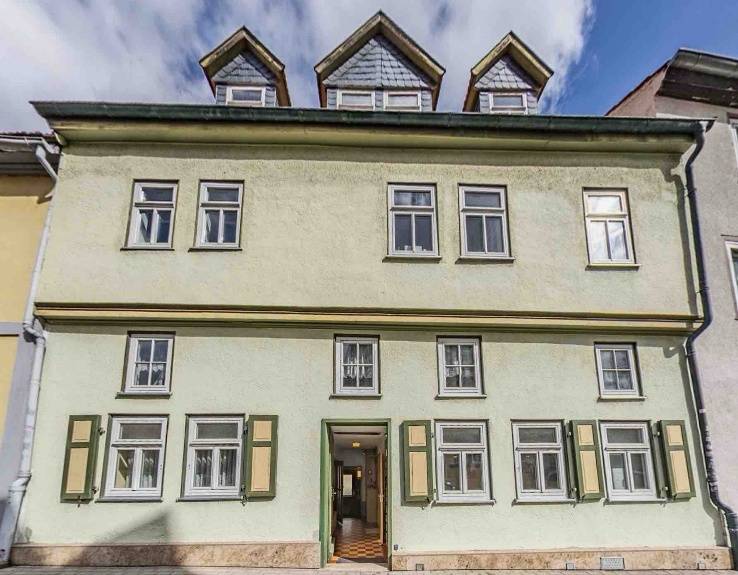
When the COVID-19 pandemic began, Michael got an e-bike, with which he had travelled (as of October 2026) more than 13,000 kilometers. On one of these bike trips, coming from the city of Mühlhausen back to Erfurt, the two “Hausmates” stopped spontaneously for lunch. Michael fell in love with the little, medieval town of Bad Langensalza—and later held that his desire to move there was so high, that he and Jörg in a short time bought a house there in October 2020.[16]
Later Life
Co-creating the Haus der Spuren
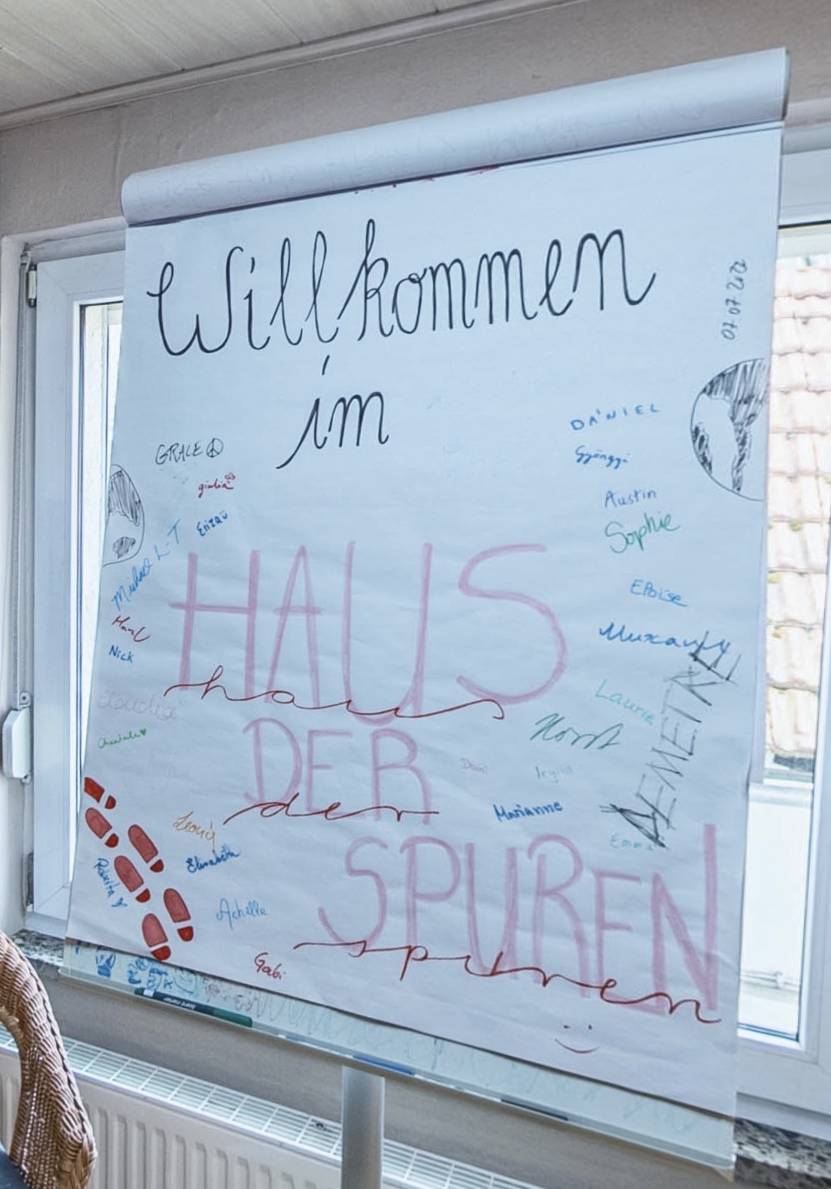
The freshly-bought house was ideal for a museum; therefore, Haus der Spuren opened as the German version of TRACES. [28] Michael set up a Workaway profile for the museum, through which many young people with different backgrounds and ethnicities would come together and develop themselves, while also gathering diverse experiences in the heart of Germany[29][30]. Over the six years, Michael and Jörg hosted some 70 “Workawayers” from all around the globe: Israel, Iran, Brazil, Albania, Georgia, the Philippines, Russia, most of the EU, etc. They also had nine people from the US, but for unclear reasons, five of them left the project earlier than planned; Michael still is unsure why he can’t work well with some of his American compatriots.
Usual tasks of the “Workawayers” vary a lot, but the following are the most common: research and panel design, and PR-media management. According to Michael, the relationship is like at medieval or even East-Coast colonial universities: The professor lives together with students, thus instructing them in-depth in not only just one subject, but many other things as well.[3]
With some of the other nationals, however, he’s worked exceptionally well:
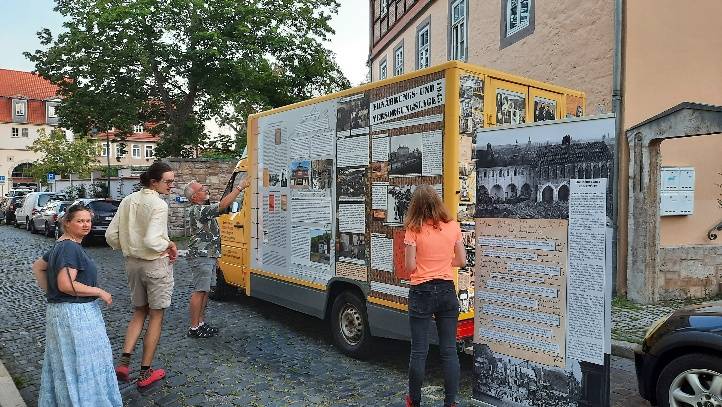
In the summer of 2021, while showing the BUS-eum in the United States with one of his first Workawayers, two in Bad Langensalza followed his almost-daily phone conferences with them to construct the History Mobile, which went on to tour 60 communities across Thüringen, before being shown in: France, Spain, Portugal, Italy, Austria and Switzerland – with more countries in the offing to be visited in the next years.
On Thursdays, mostly the foreign volunteers give presentations about their home countries. The event is called “Global Salon LSZ” and is only held in English, thus offering a language course to local residents, along with exposure to myriad aspects of life in other cultures.[31][32][33][34]
Opening Phyllis–Thrams–Luick Haus[35]
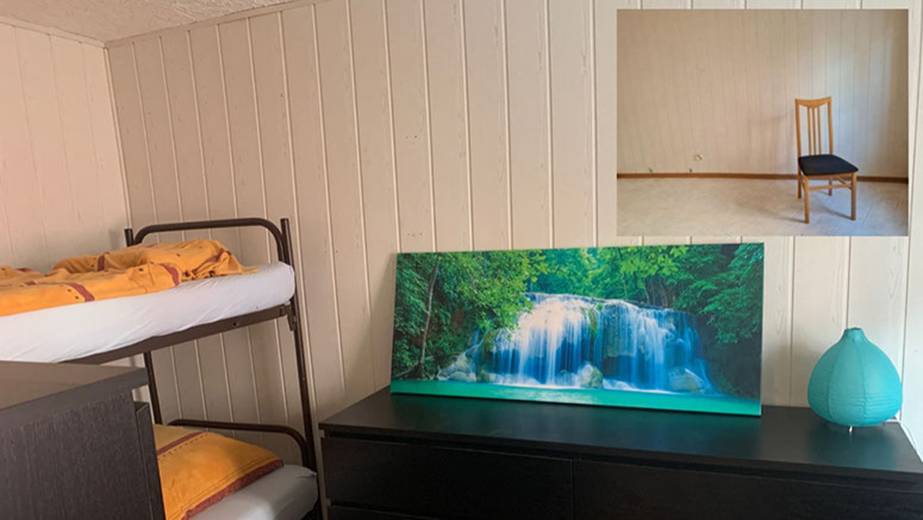
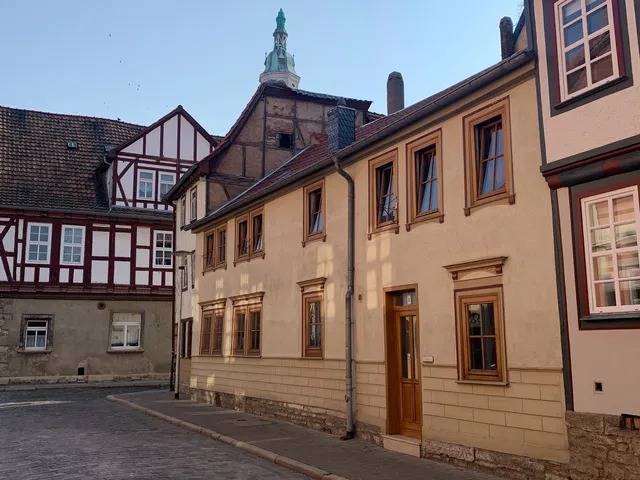
After the Russian invasion of Ukraine, Michael took a fifth of his mother’s inheritance and bought a house in Bad Langensalza, which had stood empty for a year and a half, in “needy” condition. Approximately 40 volunteers worked on the house, and within a week managed to complete the tasks needed to be ready to house Ukrainian refugees. By October 2026, 80 refugees had stayed there for various lengths of time - six of those in Haus der Spuren.[36][37][38]
Declaring a Republic of One
After boundlessly exploring the world and endlessly seeking abiding happiness and recurring joy, Michael has realized that happiness for him is something he chooses to create from “top down”, while joy chooses him from below and spreads upward, then outward. As he explains it: His long pursuit of happiness has been to practice seeing, hearing, touching, tasting, feeling the Creation around him, then choosing to be grateful for that wealth of experiences, encounters and realizations. Happiness abides: It comes again and again, each time he’s able to remember how rare and potentially fantastic each moment of Life is. His sensation of happiness is a cerebral recognition that Life is abundant and rich, in itself adequate even while fleeting.
In contrast: His recurring practice to feel the presence of joy – whenever it chooses to visit him, usually unexpected yet always all-encompassing – arises from deep inside him. Joy regenerates: It comes rarely, yet each time it briefly does, it feeds the soul and sustains the will to live further. Michael’s sense of joy is a cellular knowledge, far beyond mere mental recognition, that Life is all-fulfilling and complete in itself. Joy recurs on its own schedule and dictates itself the duration of its visit; Michael can only delay its departure by not rushing into the newest Next Moment.
Spreading awareness of how to attain and sustain abiding happiness and recurring joy is Michael’s new “job”, which, based on past experience, he most likely will approach with much gusto and drive.
Stay tuned!
In memory
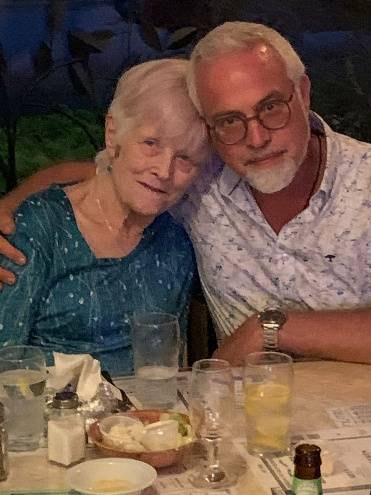
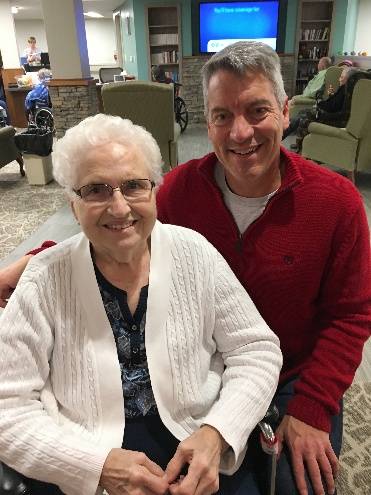
Michael wishes to honor two of his several “mothers” – his biological one, Phyllis, and Pat, both vibrant Iowa farm girls who grew up between Mason City and Clear Lake. Pat had been, among other roles, his CLHS teacher of English and journalism, later for years chair of TRACES… and abiding friend.
Sources
Luick-Thrams, Michael. Oceans of Darkness, Oceans of Light–a Pentalogy: Our Troubles and Treasures in the New World.
Youtube: Michael Luick-Thrams talks about his life (TRACESPUREN)
Luick-Thrams, Michael (2019). Turkeyfoot: What is Our Big Problem?
"He's getting ready for fair... and for self-sufficiency" (PDF). RuraLife.
Luick-Thrams, Michael (2019). Turkeyfoot: What is Our Big Problem?. p. 77.
Luick-Thrams, Michael (2015). Roots of Darkness (Volume 1). p. 56.
Luick-Thrams, Michael (2019). Turkeyfoot: What is Our Big Problem?. p. 91.
Luick-Thrams, Michael (2019). Turkeyfoot: What is Our Big Problem?. p. 17.
Luick-Thrams, Michael (1997). Creating New Americans:WWII-Era European Refugees Formation of American Identities (doctoralThesis). Humboldt-Universität zu Berlin, Philosophische Fakultät I. doi:10.18452/14498.
Carole, Gieseke. "Safe Haven". AlumniProfile.
"Ein toter Soldat berührt über Jahre und Länder hinweg". Thüringer Allgemeine.
Holly, Baumbach. "Things to do in Chicago over this Auto Show weekend". Chicago Tribune.
""History Mobil" macht Halt in Saalfeld". Ostthüringer Zeitung.
Renate, Klein. ""History Mobile" macht Station in Schleiz". Ostthüringer Zeitung.
Mertin, Friedemann. "US-Wahlkämpfer in Langensalza". Bad Langensalzaer Allgemeine.
Lynch, James. "Independent Michael Luick-Thrams hopes to 'interrupt narrative' of Senate campaign". The Gazette.
Friedemann, Mertin. "Heirlooms from German Internees during World War 2 go to Bad Langensalza". Unstrut-Hainich.
"Voneinander lernen - Zwei neue beim ,,Spuren" e. V. in Bad Langensalza". Allgemeiner \”Anzeiger zum Wochenende Mühlhausen/Bad Langensalza.
"Ausstellung zu deutsch-amerikanischen Lebenswegen". Bad Langensalzaer Allgemeine.
"Ukrainerin schildert die Lage in ihrem Land". Thüringer Allgemeine.
"LEARNING ENGLISH - Spuren e. V. in Bad Langensalza is again offering language courses".
“‘Spirit of Football’ kommt nach Bad Langensalza". Thüringer Allgemeine.
"Learning English - Spuren e. V. in Bad Langensalza is again offering language courses". Allgemeiner Anzeiger zum Wochenende Mühlhausen/Bad Langensalza.
"Scattergood-style hostel launches in Germany for Ukrainian refugees". Friends Journal.
"Ein Asyl mit historischen Vorbild". Uhz-online.
Friedemann, Mertin. "Bad Langensalzaer Buys a House for Ukrainian Refugees". Thüringer Allgemeine.
Coming-Out Story: Aren't I a Poster Boy of Rural-US, Baby-Boomer Gay Men's Evolution?
Out of Hitler's Reach: Scattergood Hostel for Euro refugees in WWII